

CCTV Laws and Privacy Rules in Hong Kong
Short answer: two laws matter when you use CCTV in Hong Kong. The Security and Guarding Services Ordinance (Cap. 460) decides who may install it: anyone installing, maintaining or repairing CCTV for reward must be a licensed security company. The Personal Data (Privacy) Ordinance (Cap. 486) decides how it is used: cameras, notices, retention and access must respect privacy. The Privacy Commissioner (PCPD) issued updated Guidance on the Use of CCTV Surveillance in October 2025.
KNS SYSTEM LTD (website brand SECURITY HONG KONG LTD) holds Security Company Licence No. 1507 (Type III) and is Registered Electrical Contractor No. 029394. This page is general information, not legal advice.
The two laws at a glance
| Law or guidance | What it covers | What it means for you |
|---|---|---|
| Cap. 460 Security and Guarding Services Ordinance | Installing, maintaining or repairing security devices for reward is security work | Hire a company holding a security company licence (Type III) |
| Cap. 486 Personal Data (Privacy) Ordinance | CCTV images of identifiable people are personal data | Collect fairly, keep footage only as long as needed, protect and limit access |
| PCPD Guidance on the Use of CCTV Surveillance (October 2025) | Necessity, proportionality, transparency, retention and security | Assess the need, avoid private areas, put up notices, set retention and access rules |
Licensing: who may install CCTV (Cap. 460)
- Installing, maintaining or repairing CCTV, burglar alarms or access control for reward is security work.
- The company must hold a security company licence (Type III), issued by the Security and Guarding Services Industry Authority (SGSIA).
- You can check a licence on the official list of licensees or by scanning the QR code on the e-licence. Step-by-step: How to verify a licensed security company in Hong Kong.
Privacy: how CCTV should be used (Cap. 486 and PCPD guidance)
- Necessity and proportionality: decide the purpose first and consider whether a less privacy-intrusive option would work. Assess whether continuous recording, high resolution or face recognition is really needed.
- No cameras in private areas: do not install CCTV where people expect privacy, such as toilets and changing rooms.
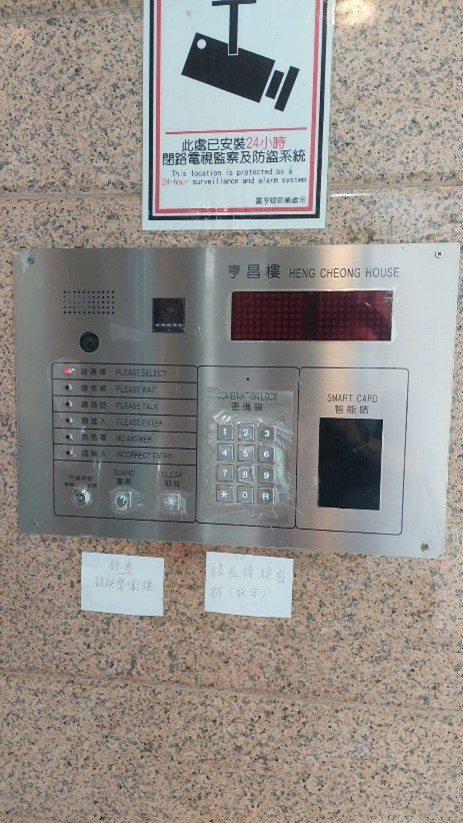
- Notices: place clear notices at the entrance to and within the monitored area.
- Retention: keep recordings no longer than needed, set a retention period and let the recorder overwrite automatically.
- Security and access: keep the recorder in a locked or restricted place, use individual accounts and strong passwords, limit who can view or export, and log each review or export.
- Disclosure: use footage for the stated purpose; give copies to others only with consent or where an exemption under Part 8 applies (for example, the prevention or detection of crime), and record what was disclosed and why.
Homes and village houses
- Cover your own entrances, side doors, walls and back lane. Village houses often need cameras at wall corners and the back lane, not just the front door.
- Do not aim cameras into neighbours’ windows or doors; use privacy masking where the view crosses into neighbouring property.
- Do not install cameras inside bathrooms, and take care with bedrooms.
- Outdoor cameras need a suitable waterproof rating and tamper protection.
- Put up a CCTV notice at the entrance.
Buildings and flats
- CCTV in common areas (lobby, lifts, staircases, car park) is normally installed and managed by the owners’ corporation or management company, in line with the deed of mutual covenant and the Building Management Ordinance (Cap. 344).
- If you want a camera outside your own flat door, check the deed of mutual covenant, ask the management office first, and keep the view to your own doorway. More (in Chinese): building and estate CCTV.
Offices and shops
Employers monitoring staff should follow the PCPD’s employee-monitoring guidance: assess the need, consider alternatives, have a clear written policy, tell staff, and control how footage is kept and used. Covert monitoring is only for exceptional cases. More (in Chinese): workplace CCTV and employee privacy.
How we set up systems to help you comply
We use privacy masking for areas outside the purpose, separate viewing and export permissions by role, automatic overwrite matched to your retention period, review and export logs, and accurate recorder time. Installation details and prices: Licensed CCTV installation in Hong Kong. A free site survey is provided for new installations; on-site repair inspections usually cost HK$800–1,500 depending on the fault.
FAQ
Is it legal to install CCTV at a village house in Hong Kong?
Yes, CCTV can be used to protect a village house. Point cameras at your own entrances, walls and back lane, avoid neighbours' windows and doors (use privacy masking where needed), put up a clear CCTV notice, and do not install cameras in bathrooms. If you pay a company to install it, the company must hold a security company licence under Cap. 460.
Does a CCTV installer in Hong Kong need a licence?
Yes. Installing, maintaining or repairing security devices such as CCTV for reward is security work under the Security and Guarding Services Ordinance (Cap. 460), so the company must hold a security company licence (Type III). KNS SYSTEM LTD holds licence No. 1507.
How long can CCTV recordings be kept?
The Personal Data (Privacy) Ordinance does not set a fixed number of days, but recordings should not be kept longer than necessary for their purpose. Set a retention period and let the recorder overwrite old footage automatically.
Can I point a camera at my neighbour's door?
Avoid it. Limit the view to your own doorway or property, use privacy masking to block neighbouring doors and windows, and in a building check the deed of mutual covenant and ask the management office first.
Do I need a CCTV notice sign?
The PCPD guidance recommends clear notices at the entrance to and within the monitored area, so people know CCTV is in use. The notice can state the purpose and a contact person.
Who can view or receive copies of CCTV footage?
Only authorised people should review footage, and each review or export should be logged. Footage should be used for the stated purpose; disclosure to others needs the person's consent or an exemption under Part 8 of the Ordinance, such as the prevention or detection of crime.
Sources: Cap. 460, Cap. 486, PCPD Guidance on the Use of CCTV Surveillance (October 2025). General information only, not legal advice.
Contact: general enquiries 3170 7019, sales 2122 9527, WhatsApp 9439 8568. Contact us.